


In case you missed it earlier this week, I’m pleased to be offering my first official perk to paid annual Do Not Pass Go subscribers in the form of discounted tickets to the smash hit one-man play, Rogers v. Rogers!
Returning to Toronto at the Canadian Stage theatre this fall, the show relates the cable empire’s sordid succession drama and merger with Shaw while hilariously excoriating the state of competition and power in Canada. See my review here.
Following the Nov. 20 performance, I’ll be joined on stage by playwright Michael Healey and Globe and Mail reporter Alexandra Posadzki, who wrote the book the play is based on, for a live podcast conversation about Rogers, the Competition Bureau, Edward Rogers’ love of McDonald’s meals, oligopolies and who knows what else.
Sign up for an annual subscription or upgrade an existing one to get a code for 10-per-cent off select tickets to this show. If you’re an existing annual subscriber, simply email me at peter@donotpassgo.ca to claim your code. Either way, act now – ticket quantities are limited:
And now, on to our regularly scheduled programming…
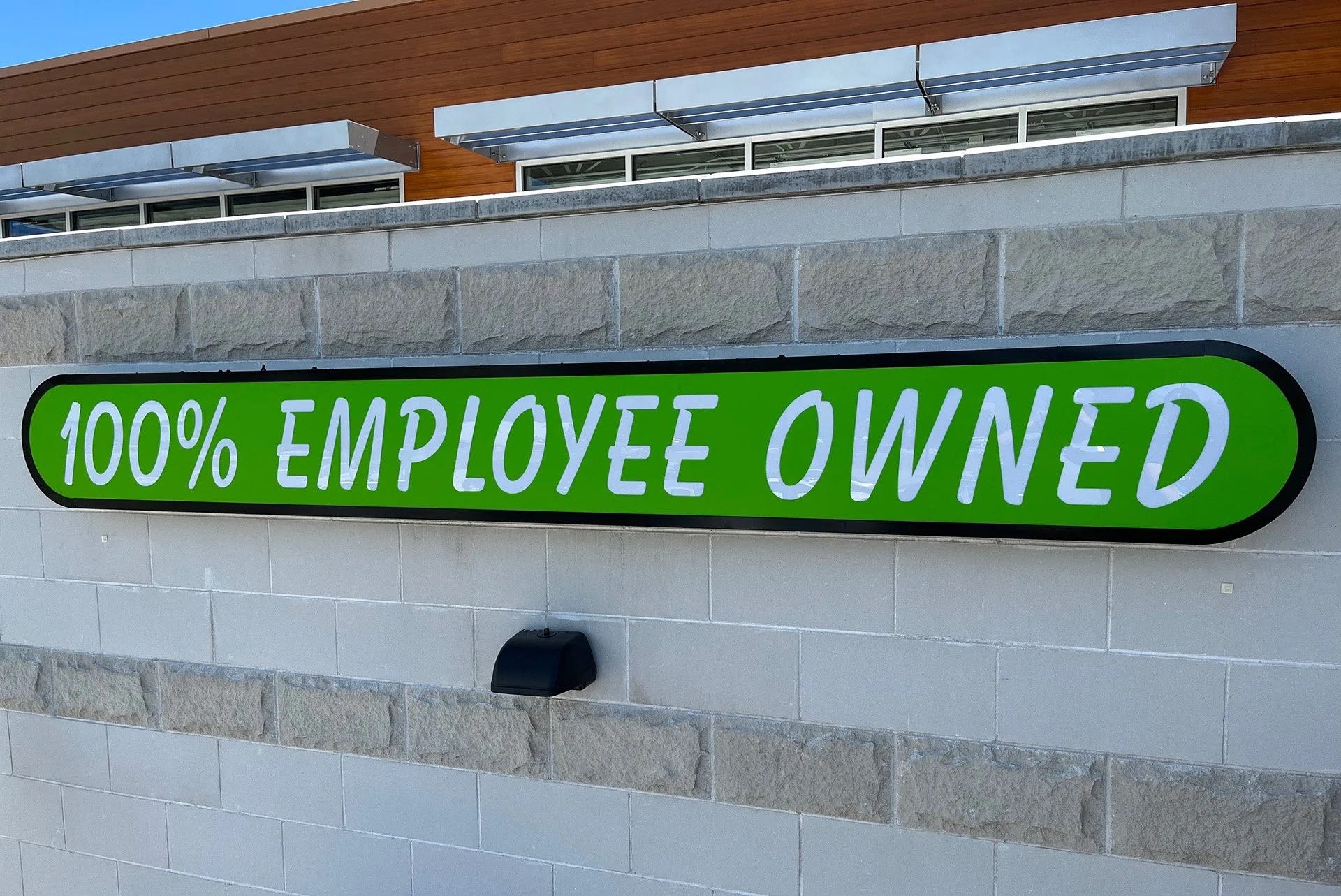
In 2024, the federal government enacted rules enabling a new type of corporate structure in Canada – employee ownership trusts (EOTs). By allowing company owners to sell their operations to their employees, EOTs introduced a new alternative to being acquired by competitors or asset managers such as private equity firms.
A handful of companies have since made the leap, with their primary motivation generally being to stay true to their founders’ values and to avoid dramatic changes in operation. But EOTs’ secondary effect is that they preserve competition by keeping companies independent, thereby preventing further consolidation in their respective sectors. One downside to that for sellers, however, is that they may end up settling for lower buyout prices.
Recognizing that, and mirroring similar developments in other countries, Canada’s rules included a capital gains tax exemption for owners on the first $10 million of a sale to an EOT. But the exemption came with a catch – it was set to expire at the end of this year.
Proponents worried that the EOT concept would be dead in the water without this exemption, which is why they were ecstatic when the government announced its intention to make it permanent in the recent spring economic update. Last week, the feds did just that.
At the same time, another company has joined the ranks to become Canada’s seventh EOT. Founded in the 1980s, Toronto-based philanthropy-consulting firm KCI last week announced its conversion, with the company’s executive team owners agreeing to sell to their 50 employees for an undisclosed amount.
KCI got its process underway in plenty of time to meet the now-moot tax exemption deadline, but its principals are nevertheless happy to see the incentive made permanent. Chief operating officer Paul Koreen joined Do Not Pass Go this week to explain what this will mean for the company and its new owners.
Why did KCI’s executives decide to sell the company to an EOT?
We are a consulting practice that focuses exclusively on the Canadian nonprofit sector as our clients and we have two main streams of work: a philanthropic-focused side and an executive search and talent side. We work with all sub-sectors of the Canadian charitable sector, so health care, education, arts and culture, community service, some religious organizations.
This shift to broad-based employee ownership is really just the perfect match with our values and core purpose as a business and who we want to be and how we want to live. Our core purpose is focused on better communities and improved lives and this is a piece of that for our staff. First and foremost, it fit with our values.
It was also a perfect fit for us in terms of ownership succession planning. In a small- to medium-sized professional services firm where you have a longer history, there’s always transitions of leaders that has to be sorted out. This is an elegant solution for us because, when everybody’s an owner and then when you depart, that role concludes.
We feel like also it’s a unique differentiator in our marketplace. It’s a great recruitment and retention piece for our employees. The opportunity to be a part owner is a cool and an exciting aspect of being an employee at KCI.
Has your field been consolidating?
Yes. You do see that, particularly if you take a more of a North American-wide view. There are a number of firms like ours that are U.S.-based and that do some work in Canada, and among those we have seen consolidation. I’ve been at this for many years, so throughout history there’s been some other instances of a U.S.-based firm acquiring a Canadian firm.
For us, this was less of a what-we-don’t-want-to-be view and more focused positively on what we do want to be. Being a proud, independent Canadian employee-owned firm is what we’ve always been, so this was an opportunity to expand that to all of our team.
When you sell your company to your employees, you’re also making sure it’s staying Canadian-owned, right?
Yeah, exactly. It’s making that decision even more firm. That, for the long term, this is our plan, and now we’re even more deeply committed to that.
One of the downsides of a company going the EOT route is that the owners may be accepting less for their company than if they sold to a competitor or even private equity. You’ve talked about the values of KCI, so was it a case of values trumping value?
That maybe wasn’t top of mind in the decision-making process. Of course it’s a transaction like any other sort of business sale transaction, so there has to be an appropriate valuation undertaken, but there wasn’t a lot of deep dwelling on whether there might be a better deal out there somewhere else. I think really, just as you eloquently said, values trumped value for us.
Does this change anything for the company itself or for the employees?
There’s a great phrase that came from our friends at Grantbook, which also became an employee ownership trust, and that was, “What changes? Nothing and everything.”
It really is that. In terms of how we approach our work together as a team, nothing changes. We all still have our roles to play. This doesn’t obviously mean that suddenly everybody became the boss or everybody’s reporting to everybody somehow. It doesn’t change the structure of how the business operates.
The part that changes is the philosophical sense of ownership of the firm for all of our team. That’s maybe philosophical to start with, but as this transition unfolds over the years ahead, that becomes real as well – that there’s an opportunity for our team to, in a real way, share in the future success of the firm.
Do you think you would have gone ahead with this if there had been no tax incentive? How vital was that to the decision?
That certainly was a meaningful element for us, that when we think of the other transition opportunities available to departing shareholders in a firm like ours, this tax incentive approach is certainly superior from a financial perspective.
When I do that list of pieces that came together nicely for us, that would be on the list of one of the things that made this compelling for us in total.
Check out our podcast episode on EOTs.
🎧 ON THE PODCAST THIS WEEK:
Is Click To Cancel Finally on Canada's Radar?

Want to cancel your phone or internet service? Better carve out a serious chunk of time for calling in to plead and argue with a customer agent.
🛒 RETAIL & GROCERIES
Last month, we brought you the news of a potential tire battle in Ontario. ALL STAR TRANSPORTATION AND TIRE RECYCLING, an independent hauler in the Hamilton area, is seeking permission to argue an abuse-of-dominance case at the Competition Tribunal against Oakville-based recycling management firm ETRACKS TIRE MANAGEMENT SYSTEMS. The Tribunal hasn’t yet agreed to hear the case, but the early back-and-forth is noteworthy with eTracks accusing All Star owner Scott Cavanaugh of using artificial intelligence in drafting his response to a motion. Cavanaugh immediately fired back and denied doing so, but the Tribunal nevertheless this week decided to “remind parties to exercise caution if and when using AI. All parties, including self-represented parties, who sign and/or file a document with the Tribunal have full responsibility for its accuracy and reliability, must verify all AI-assisted content, and remain accountable for all representations made.”
The Competition Bureau is moving ahead with an investigation into property controls used by EMPIRE, parent company of Sobeys, Farm Boy, Safeway and other grocery chains, to limit competition in the market. The Bureau says it has obtained orders from the Federal Court that require the company to produce documents and testimony on those controls, which are real estate contracts that can block competitors from setting up shops near Empire operations or otherwise restrict land uses. This week’s order expands an earlier record production requirement for Halifax to nationwide, the Bureau says.
The government of MANITOBA this week introduced new measures to combat runaway grocery prices, including a nutritious food basket tracker, investment in Harvest Manitoba’s Food Transformation Centre and unit pricing measurements that will attempt to address the shrinkflation problem. The Transformation Centre, which is receiving $2.5 million, will aim to reduce waste through processing food donated by producers into meals and products for families.
📱 TELECOM
The ongoing “coffee badging” saga at BELL continues, with 46 employees filing a wrongful termination lawsuit against the company. Bell recently cut the workers, saying they had violated the company’s code of conduct by manipulating their attendance records through various means, like swiping their badges at the office just before midnight and then again shortly after to create the impression that they were in for two days. But a lawyer for the workers says he has acquired an internal mass-layoff document that includes instructions to fire approximately 30 employees per office to meet targets set by management. Bell says it plans to vigorously defend itself from the claims.
The CRTC sure is writing a lot of letters to telcos lately, all of them in relation to new fees and price hikes. This week, the regulator wrote to ROGERS again, this time asking the company to explain new $5 wireless price hikes. Scott Hutton, the CRTC’s vice-president of consumer, analytics and strategy, wants to know if the increases are being made to customers on committed terms and whether they are part of the minimum monthly charge key contract term. “The minimum monthly charge is a key contract term that cannot be changed by a service provider during the commitment period without the account holder’s or authorized user’s informed and express consent,” he points out in the letter. This latest correspondence follows several other letters to Rogers, BELL and TELUS about new charges the trio recently brought in to offset prohibitions on fees designed to discourage customers from switching providers. All three companies insist their new fees – including device handling and SIM card charges – are above board. The CRTC has not yet said whether it will take action against the telcos for them.
Speaking of letters, the Yukon government has written to the federal government, the CRTC and BELL asking that, for the love of all that is holy, can they please do something about the territory’s poor wireless service? The letters detail significant coverage gaps, instability and signal degradation during peak usage periods and emergency events, according to the Canadian Press. The territory is asking both the CRTC and Innovation, Science and Economic Development to use regulatory levers to force better investment into infrastructure and resiliency. Bell, meanwhile, says it has spent more than $20 million on its wireless network in the territory since 2019. “Wireless expansion in rural regions is a challenge for private investment alone and we are open to partnerships with territorial and federal governments,” the company said in a statement. The latest letters follow similar complaints by Yukon Premier Ranj Pillai two years ago to Bell about poor service.
And speaking of long-running stories, outgoing TELUS chief executive Darren Entwistle takes one last swing before he retires to another country at Canada’s foreign-ownership restrictions on telcos. Entwistle tells the Globe and Mail that Canada should “let free market forces reign” when it comes to the current rules that prohibit foreign entities from owning more than 46.7 per cent of large telecom firms. The Telus boss has long advocated for removing these limits, with some supporters noting that they are an impediment to competition. It’s worth noting that they’re also the biggest obstacle to Telus selling itself to a foreign buyer and making its insiders, including the already extraordinary wealthy Entwistle, even richer.
🏈 SPORTS & ENTERTAINMENT
Ticket reseller STUBHUB took a drubbing this week across a number of jurisdictions, starting with the U.K. The country’s Competition and Markets Authority on Tuesday fined the company 900,000 British pounds (about $1.2 million Canadian) and ordered it to refund more than 50,000 fans after finding the company guilty of not showing buyers the full price of their purchases at the time of booking, a practice known as drip pricing. Next up was a report by CBC here in Canada on Wednesday, which found that StubHub had cancelled thousands of World Cup tickets purchased on its site, leaving buyers frustrated and angry. Though experts say such cancellations happen regularly with concerts and that the practice is only now receiving scrutiny because of the FIFA tournament, a number of class-action lawsuits and regulatory complaints about the company are already underway in the United States as a result.
The federal government made waves earlier this month when it overruled the CRTC on new regulations that would require streaming companies such as NETFLIX, AMAZON and DISNEY to pay 15 per cent of their Canadian revenues into funds reserved for producing local content. While the feds said the contributions would inevitably lead to price increases for consumers, many observers believed the abrupt reversal was an attempt to appease the United States in ongoing trade negotiations. Either way, the Toronto Star reported this week the government isn’t going to axe the CRTC’s required contribution entirely. While Culture Minister Marc Miller has not yet issued an official policy direction to the broadcast regulator, his office made it clear to the newspaper that the “charges for companies that earn more than $25 million in Canadian revenue will not be dropped to zero.”
🏦 BANKS
The Financial Consumer Agency of Canada has fined ROYAL BANK $4.25 million for failing to transfer amounts from deactivated credit card accounts to customers’ other accounts. That violation of the federal Bank Act led to affected customers getting inaccurate credit card statements, with some incurring additional charges, according to the regulator. Nearly 228,000 accounts were affected between 2001 and 2024. In addition to the fine, the bank has refunded $22.4 million to customers and made a charitable donation of $299,000 to make up for those accounts that could not be located.
✈️ AIRLINES
Travel agents are having their commissions cut by AIR CANADA as the airline looks to lower costs that have been affected by rising fuel prices. The Association of Canadian Travel Agencies and Travel Advisors, which represents nearly 27,000 travel agents across Canada, says its members could see a loss of about a quarter of Air Canada-related revenue as a result. Agent commissions are typically between 8 and 10 per cent of a booking cost, with some telling the Canadian Press that the cuts by the airline are now going as low as 3 per cent. .
In yet another example of the many problems with dynamic pricing, CBC has a story about a Montreal couple who recently paid more through an AIR CANADA flight “sale” than they did prior to the supposed discount event. As the story goes, the couple had bought a return flight to Chicago only to see the airline announce a 25-per-cent discount sale. Being within their 24-hour free cancellation window, they scrapped their tickets and repurchased the same flight through the sale – only to end up paying $5.71 more. The issue, as the airline explained, is that there was a lot of interest in the sale event, which drove up demand and therefore the dynamic prices. The story is a great example of what constitutes regular and sale prices in an age where algorithms determine both, which we covered recently here in a podcast episode.
🛢️ RESOURCES
More merger activity is happening in Canada’s oil patch, with SATURN OIL & GAS taking over BURGESS CREEK EXPLORATION in a $116 million deal. Burgess Creek’s board has unanimously approved the aggregate cash offer from Saturn. The Competition Bureau is having a look the merger of the Calgary-based companies, as the combined entity’s revenues exceed the $400 million threshold that triggers a mandatory review.
🚢 SHIPPING
The Competition Bureau is also taking a look at a major $4.2 billion (U.S.) shipping merger between Germany’s HAPAG-LLOYD and Israeli firm ZIM, which was announced in February. The deal would cement Hapag-Lloyd as the world’s fifth-largest shipping company by capacity, which some warn would deepen the industry oligopoly. The Journal of Commerce reports that the industry has gone from more than 20 major east-west ocean carriers to just 10 over the past 25 years, with the top five controlling 64.5 per cent of global capacity.
🚨 COMING UP
There’s something going on with the political left, not just in Canada, but broadly. Looking down to the U.S., avowed democratic socialists aren’t just winning elections and primary races, they’re mopping the floor with their establishment competitors. This isn’t being lost on Canada’s NDP, either federally or provincially, with party leaders glomming onto the same playbook – one that focuses squarely on affordability and the competition issues behind it. Ontario NDP leader MARIT STILES joins the Do Not Pass Go podcast on Tuesday to discuss how the party is reinventing itself by focusing on the problems that matter most to voters.
I wonder whether this is a fancy press release and not much else. I learned that residential investor co-ops are not really viable due to investment caps prior to expensive paperwork.