


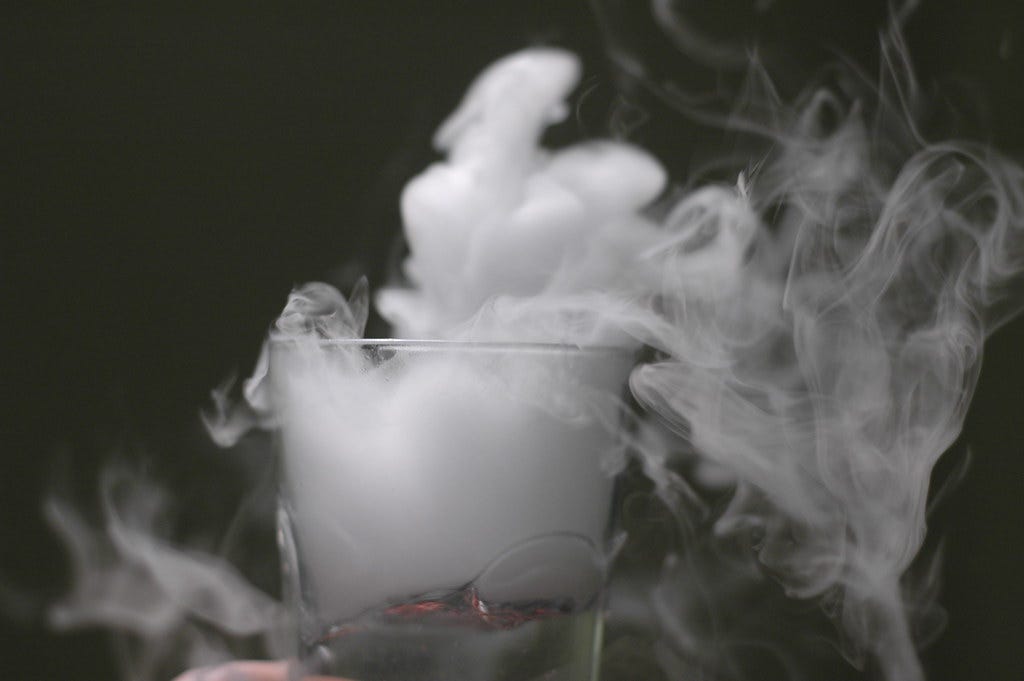
A small, now defunct company in British Columbia is taking a French industrial gases giant to court for allegedly freezing it out of the dry ice business.
Fraser Valley Dry Ice, started in 2020 in Abbotsford, B.C., is asking Canada’s Competition Tribunal for leave to proceed with an abuse-of-dominance case against Paris-based Air Liquide, who it says engaged in a sustained pattern of conduct that progressively impaired its “ability to compete and ultimately resulted in its exclusion from the market.”
Fraser Valley says Air Liquide began implementing frequent and unreasonable price increases and supply constraints as of 2022, right after it informed the multinational of its plans to expand. Air Liquide maintains dominance in supply of liquid carbon dioxide – the main component for the dry ice that is used in refrigeration – and in downstream dry-ice sales through its own subsidiaries, according to the company.
“The supply of liquid carbon dioxide and industrial gases in Canada is highly concentrated, with a limited number of large suppliers operating at the upstream level,” the filing says. “Downstream distributors such as Fraser Valley Dry Ice are dependent on upstream suppliers like Air Liquide for access to essential inputs, with limited or no viable alternative sources of supply.”
Air Liquide continued to supply liquid carbon dioxide to fellow multinational firm Linde, which also operates downstream dry-ice sales, despite repeatedly claiming force majeure events that supposedly disrupted gas inventories.
The price increases and erratic supply got so bad that Fraser Valley Dry Ice was forced to wind down operations in January of this year, according to the filing. A prospective buyer expressed interest in acquiring the business and continuing operations, but the transaction did not proceed because the purchaser was not able to secure a reliable supply of liquid carbon dioxide from the French company.
“Air Liquide used its control over an essential upstream input – liquid carbon dioxide – while competing in the downstream market for dry ice, to impose pricing and supply conditions that increased the applicant’s costs and constrained its access to supply,” the filing says.
“These measures had the effect of materially compressing the margins available to Fraser Valley Dry Ice and impairing its ability to compete effectively in the downstream market… and had the effect of disciplining, limiting, and ultimately eliminating that competitor from the market.”
Air Liquide did not respond to a request for comment.
The Competition Bureau in 2018 found Canada’s industrial gases market to be highly concentrated, with three major companies dominating: Air Liquide, Ireland-based Linde and U.S.-based Praxis.
Linde entered into a consent agreement with the Bureau that year to sell its Canadian operations to Germany-based Messer following its merger with Praxis.
🛢️ RESOURCES
The Competition Bureau is pressing its investigation into Calgary-based oil and gas firm KEYERA’s proposed acquisition of Houston-based gas company PLAINS ALL AMERICAN PIPELINE after acquiring a court order this week to gather information related to the deal. The Federal Court order requires Calgary-based INTER PIPELINE, another industry player, to produce records that the Bureau believes to be relevant to its probe into whether the acquisition will lead to a substantial lessening or prevention of competition in the Canadian oil and gas industry.
🥊 COMPETITION
The COMPETITION BUREAU has also unveiled its planned priorities for 2026-2027 with a release titled “Advancing Competition to Improve Affordability and Choice.” The plan includes focusing on sectors that affect affordability the most, including food and housing, as well as continuing to crack down on deceptive marketing and hidden costs. The Bureau is also promising to focus on what it considers to be critical sectors: digital services, artificial intelligence, telecommunications, financial services, health and infrastructure.
New York Mayor Zoran Mamdani is putting anyone who offers a subscription online on notice by resurrecting CLICK TO CANCEL rules. The rules – which essentially require anyone offering simple sign-ups for products and services online to make them just as easy to cancel – were originally introduced nationally in the United States by the Federal Trade Commission in 2024. But, an appeals court struck them down last summer just days before they were scheduled to take effect. Now, New York’s Department of Consumer and Worker Protection is moving to strengthen the U.S. city’s consumer protection laws as part of a crackdown on “subscription tricks and traps.” Amazingly, click-to-cancel rules don’t appear to be anyone’s radar in Canada, despite such “tricks and traps” being just as widespread.
🏈 SPORTS & LEISURE
The U.S. Department of Justice has launched an antitrust investigation into the NATIONAL FOOTBALL LEAGUE over how the league is handling its television and streaming rights. While some of the lawsuit may be driven by how sports leagues including the NFL are increasingly parcelling out televised games to a host of providers, ESPN reports that the Murdoch family, which owns the FOX CORPORATION, might be behind it. Fox’s television rights with the NFL run out after the 2029 season, and the network may be looking to put pressure on the league to renegotiate by involving the government.
U.S. private equity firm GTCR has acquired Montreal-based LIVEBARN, which provides amateur and youth sports live streams, in a $400 million-plus (U.S.), The Globe and Mail reports. Livebarn has cameras at more than 4,000 playing surfaces in almost every U.S. state and Canadian province and territory. The deal, which was approved by Industry Minister Mélanie Joly and Identity and Culture Minister Marc Miller, is the latest in a wave of mergers and acquisitions in youth sports and sports technology, the Globe notes.
🕺 ENTERTAINMENT
The entertainment industry mega-takeovers continue, with investment company PERSHING SQUARE this week tabling an offer estimated to be worth $64 billion (U.S.) for UNIVERSAL MUSIC GROUP. Pershing, which already owns a stake in the Netherlands-based record label as well as holdings in Google, Meta, Amazon and Burger King parent Restaurant Brands International, is looking to get in on the trend of growing music revenue, which is being driven by streaming services. Universal’s stable of artists include some of the biggest names in the world, including Taylor Swift, Sabrina Carpenter and Kendrick Lamar. The label itself has some Canadian connections, with it being briefly owned by the Bronfman family through their company Seagram’s in the late 1990s.
✈️ AIRLINES
AIR CANADA is testing a new passenger complaints resolution system that employs a third-party mediator rather than the federal Canadian Transportation Agency. The airline is asking 500 randomly selected passengers who have complaints in with the CTA to try out the test, which is being run by a subsidiary of U.K.-based CDRL Group. The program would aim to resolve disputes within 90 days and alleviate the current CTA backlog of 95,000 complaints, many of which are stretching out to two or three years. Critics, however, warn that a system that involves a supposedly neutral mediator hired by an airline should be closely watched. As one such critic tells CBC: “We don’t want the fox in charge of the chicken coop here.”
🚨 COMING UP
Just a reminder that we’re catching a short breather next week, and the Do Not Pass Go podcast will be back with a thrilling new episode on Apr. 20. Now is a good time to hit that “subscribe” button… but you’ve already done that, right?
Today's blog ties in with the supply of concentrated gases for hospitals and the market fight between incumbents and new suppliers with local concentrator systems.
The new suppliers sold machines that concentrated the gas required without the delivery of gases by the tank.
Just Google the past news stories about the dominance of incumbent suppliers.