


A busy week in competition news? You don’t say! There’s never a not-busy week. So let’s get to it, shall we?
🥊 COMPETITION
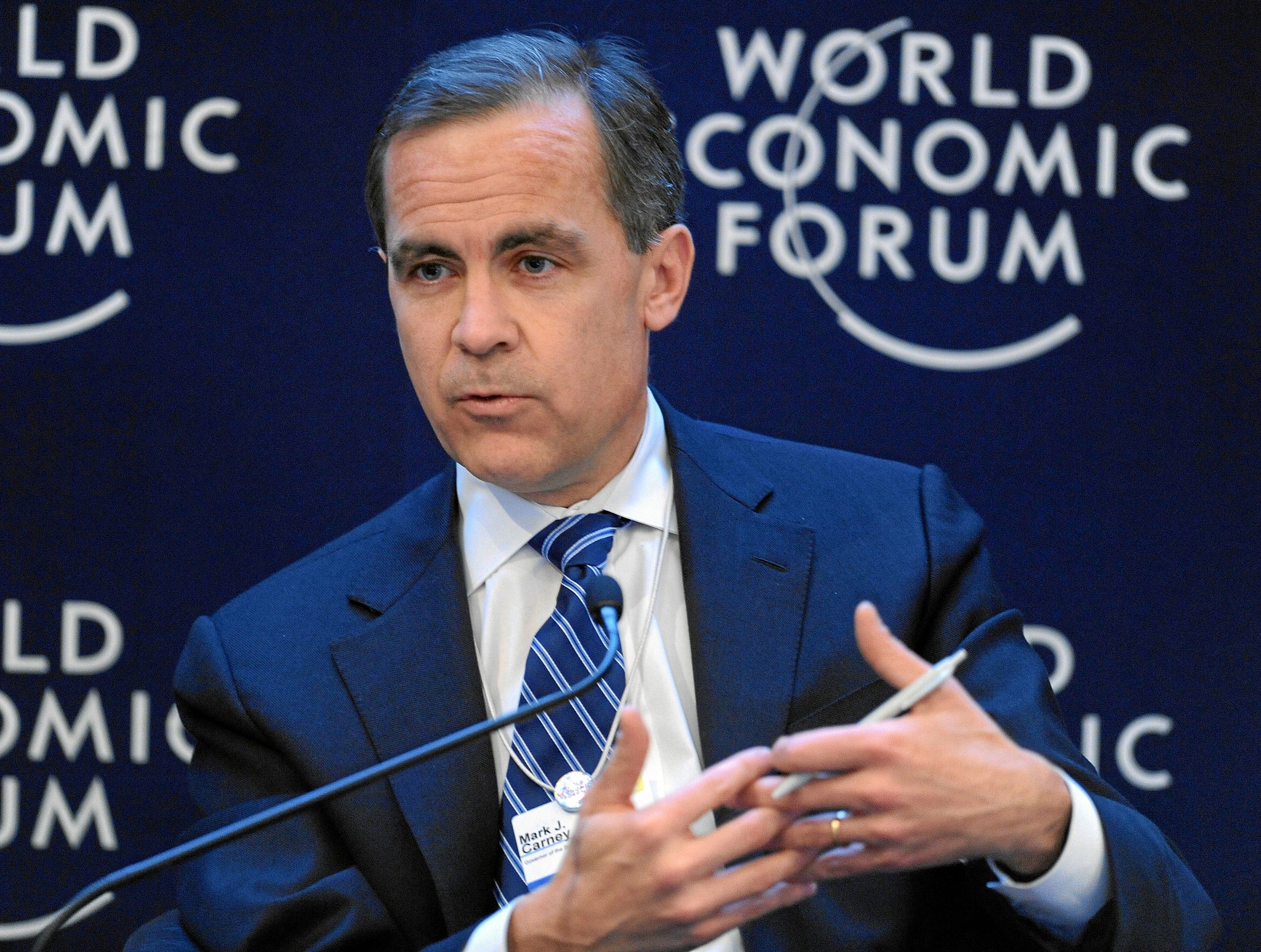
Prime Minister MARK CARNEY released a YouTube video this week in which he addresses the cost-of-living crisis and how his government is approaching it. The PM points to post-COVID inflation, supply chain disruptions and productivity issues as the causes of runaway prices before talking about the trade deals he’s signing and his government’s recently announced increase to the HST rebate as some of the solutions. He doesn’t mention competition, concentration and oligopolies at all, which is drawing heavy criticism online. It’s generally a good idea not to read YouTube comments but in this case, analysis of the nearly 1,000 (at the time of this writing) through scrapecreators.com suggests the PM is badly misreading the room: “Many commenters are expressing anger over rising grocery prices, attributing it to corporate greed and monopolistic practices. There’s a strong desire for government intervention to control prices and enhance competition in the grocery market… There is a significant push for breaking up monopolies and creating a public option for groceries. Many believe that increasing competition is crucial to combating ‘greedflation’ and improving affordability for Canadians.” Comments on Twitter/X, where Carney also posted the video, are about what you’d expect, but those on the more liberal-leaning Bluesky are generally in line with the analysis above. YouTube and social media sentiment is obviously to be taken with a grain of salt, but to the online crowd at least, this was no Davos speech.
And while we’re on the subject of critiquing the government, former BlackBerry boss JIM BALSILLIE is on the Do Not Pass Go podcast this week talking about privacy and surveillance pricing. Canada’s weak privacy protections are resulting in retailers being able to raise prices and employers lowering wages. None of the political parties legitimately support stronger privacy for consumers, Balsillie says, which is why he’s calling them on the carpet for it. Listen here:

💾 BIG TECH
The state of California has charged AMAZON with running a massive price-fixing scheme, where the online retailer allegedly forces third-party sellers into anti-competitive agreements that prevent them from offering lower prices elsewhere online. “Amazon doesn’t have cheap prices because of its good business sense. Amazon’s ‘cheap’ prices are the result of intimidation and illegality that drove up prices for consumers across the marketplace,” said state attorney general Rob Bonta. “My office has uncovered evidence that Amazon bullied vendors to hike up the price of their products sold at other shops, or secured the removal of these products altogether, to ensure Amazon was the cheapest place consumers could find products.” Worth noting is that Amazon is also under investigation by the Competition Bureau here in Canada for the same thing.
🕺 ENTERTAINMENT & SPORTS
Speaking of California AG Bonta, 2026 is shaping up to be a busy year for him. NETFLIX has announced that it’s dropping out of the race to acquire WARNER BROS., clearing the way for rival bidder PARAMOUNT. But Bonta says not so fast – with Hollywood accounting for a significant portion of California’s economic output, he intends to be “vigorous” in his review. Paramount’s purchase of Warner Bros. would combine two major film studios, streaming services and news operations, as in CNN and CBS.
Get your popcorn ready, the LIVE NATION antitrust trial begins in New York on Monday with jury selection. After rumblings over recent weeks that the U.S. Department of Justice might settle the case rather than fight, it’s going ahead after all. The judge in the case has dismissed some of the charges, including the prosecution’s claims that the company holds a monopoly over venue booking and that it harms the fan experience, but he has cleared the way for others – including that Live Nation has coerced artists to use its promotion services and that it monopolizes the ticketing market. Whatever the eventual outcome of the case, some of Live Nation’s dirty laundry is about to become public.
Speaking of popcorn, CINEPLEX is once again devaluing Scene points. Members of the loyalty program who buy more expensive tickets, such as as VIP or 3D, will generally get more points, while most other purchases – including regular tickets – will accrue less. That follows Cineplex chief executive Ellis Jacob recently devaluing Canadian movies by criticizing their supposed lower quality, the upside of which prompted a legitimately insightful column by Globe and Mail film critic Barry Hertz, who suggests that the problem is perhaps that too many Canadian productions are being made altogether.
Could updated competition laws finally result in a new NHL franchise in Canada? David Sterns thinks so. Check out this week’s interview with the class-action lawyer, whose firm Sotos is currently seeking to argue abuse-of-dominance cases that would force a Canadian-led break up LIVE NATION and force different app stores onto APPLE devices. The same kind of case could be brought against the major sports leagues, he says:

🛒 GROCERIES & RETAIL
Grocery giant LOBLAW has announced a major expansion, with $2.4 billion going to 70 new locations that will create 9,000 more jobs, according to the company. The focus will be on budget-conscious customers through new Shoppers Drug Mart, No Frills and Maxi stores, which is all part of Loblaw’s five-year plan to invest $10 billion into the economy, which is exactly the sort of announcements that incumbent companies often make when they start to draw attention from governments and regulators. It’s unclear if Loblaw’s spending plan includes the *whopping* $10,000 fine the grocery chain is paying for falsely touting imported foods as Canadian-made. CBC reveals it was packaged broccoli slaw – coleslaw with broccoli (🤮) – that was the offending product. *Asterisks are meant to imply heavy sarcasm.
✈️ AIRLINES
Lethbridge and Medicine Hat are cursing WESTJET for announcing that it’s ending once-per-day flights from Calgary to the southern Alberta towns. Both were looking to rev up economic activity by boosting their local airports. “It’s a little frustrating,” Lethbridge Mayor Blaine Hyggen told reporters. “You build a community, and larger communities and communities our size are built on infrastructure like airports. … It puts a community at the next level.” Though the towns are getting denied service by WestJet, at least they’re not getting stranded outright by the airline like some Canadian travellers were this week after cartel violence broke out in Mexico. Passenger rights activist Gábor Lukács says the airline is breaking the law by not returning these customers home on other airlines: “What we see here is not so much a failure in the drafting of the regulations as much as a failure of the government to enforce the law as written.”
📱 TELECOM
The CRTC issued its semi-regular Canadian Telecommunications Market Report this week and the numbers don’t paint a very rosy picture for consumers, despite efforts by the regulator to the contrary. The report touts that wireless prices have declined significantly over the past few years, but the industry’s key metric of average revenue per user (ARPU) – a proxy for the typical customer’s bill – has continued to grow. Same goes for home internet – while prices have supposedly gone down, service providers’ profit margins have increased: “Three companies account for more than 90 per cent of Canada’s wireline EBITDA, and in 2024 one company generated significant operating efficiencies that affected its, and the wireline sector’s, overall profit margins.” That one company was almost certainly Rogers, fresh off its takeover of Shaw, and the “efficiencies” that resulted. The two key numbers in the report: household spending as a percentage of income on telecom services continue to rise, in some cases significantly depending on the income quintile.
🚨 COMING UP
As articulated above, it’s been a rough couple of weeks for Cineplex. Arts journalist, film historian and former head of Toronto’s independent Revue Cinema ERIC VEILLETTE joins the Do Not Pass Go podcast on Monday to discuss the future of movie-going in Canada. Spoiler alert: Big chains may be less in the picture.
I checked the recent Hansard transcripts on the Rogers-Shaw merger, and that CRTC report perfectly captures the disconnect in Ottawa. The government constantly points to lower sticker prices for mobile plans. The actual data tells a completely different story. The CRTC relies heavily on ARPU (basically the average cash a company extracts from each customer). That number just keeps climbing. When a giant telecom company brags about "efficiencies," regular people never see those savings. It makes me wonder why our competition laws still allow these massive mergers to sail through.
It is a rare event when a business these days that you engage with actually meets and exceeds your expectations.
What a world we live in at this moment in history. I find myself trying to minimize my interactions with businesses. The idea of not having to deal with the unenviable hours required to right an issue is huge motivation for me.
An example is buying gift cards with a large grocery chain, they completely missed crediting me the points advertised. I thankfully took a picture of the offer. Over an hour dealing with it and three weeks later I am no closer to resolving the missing points. It is surprising at the first contact, they could not credit me the points.
I am more likely to not buy any gift cards from this particular store. I not associate dealing with them as painful. Once burned twice shy.