


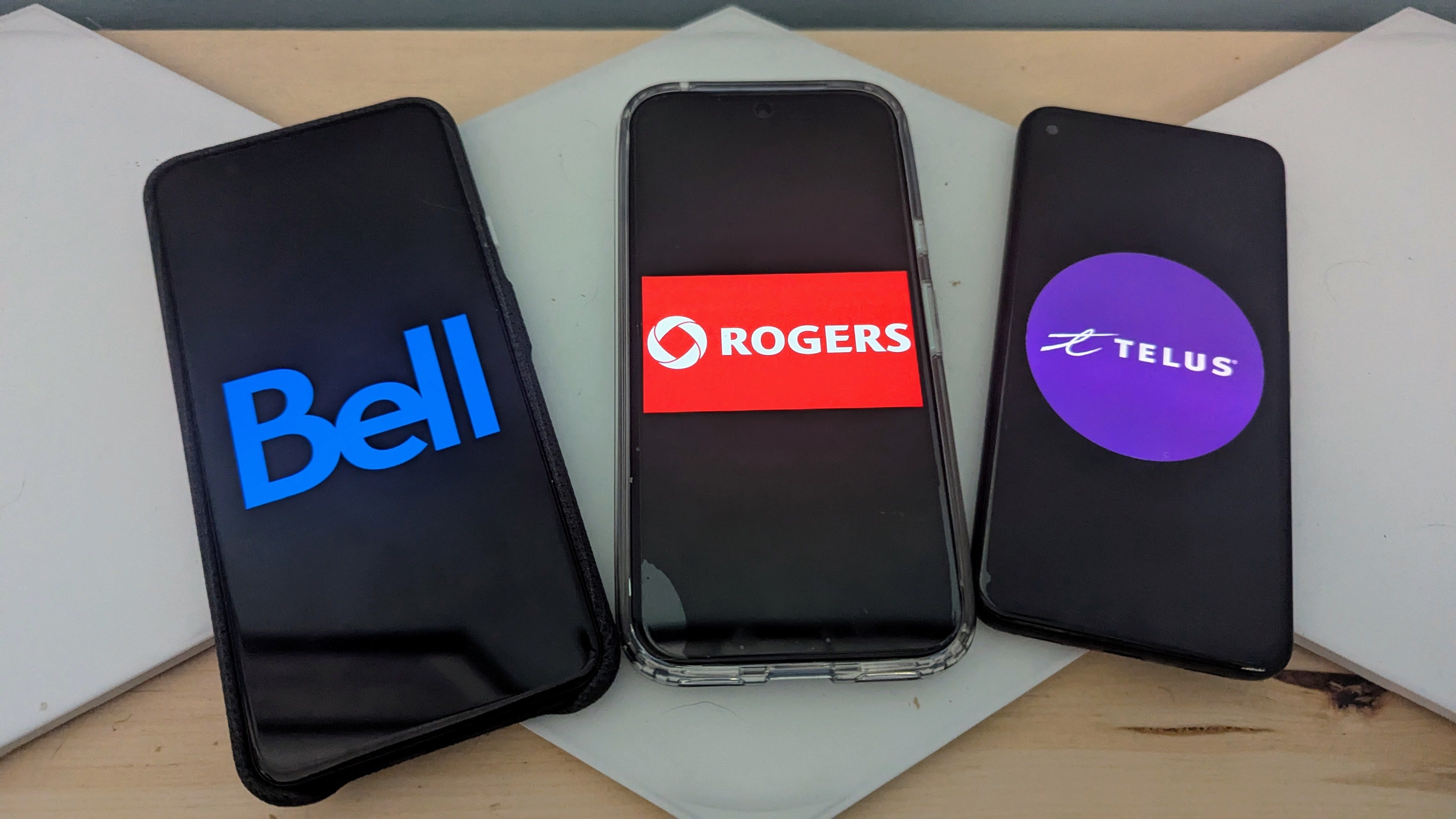
At a time when telecom complaints are going through the roof, Canada’s largest service providers have continued to flout rules requiring them to inform customers of the independent ombudsman agency that handles service and billing disputes.
Bell, Rogers and Telus were only partially compliant with the requirements in 2025, according to an annual report card by the Commission for Complaints for Telecom-television Services, releasing Wednesday.
This year’s report, which audited 37 service providers’ websites last year, shows that only 12 were fully compliant at the outset - including Bell Aliant, Bell MTS and Lucky Mobile, as well as Chatr and Comwave, but notably not their respective parents, Bell and Rogers. Telus and its Public Mobile subsidiary were fully in line, but not Koodo or the company’s other sub-brands.
Rogers and Bell were also not listed as fully compliant in last year’s CCTS report card, nor was Koodo. Rogers and Bell did not respond to requests for comment.
Telus spokesperson Brandi Merker said the Koodo website was substantially compliant in 2025 and that the CCTS questioned additional text that appeared when required search terms was entered into our website. “While the correct information and link to the CCTS appeared, we removed any additional information that also showed up alongside it in January.”
The CCTS requires service providers to have a complaint-handling webpage that gives customers information about their own internal dispute systems, as well as pointers to the federal agency. Their websites must also be searchable and easily turn up results when keywords relating to “CCTS” and “complaints” are entered.
This year’s report found that only 24 of the 37 websites had a search function at all, while half did not return results on those two search terms. Further, half of the sites also had more than one complaints-handling page, with only one listing CCTS information.
“This frustrates the [CCTS’] Public Awareness Plan objective because it fragments information available to customers,” the report says. “Customers who are trying to navigate provider websites to understand their options when they have a concern may not be provided with information about the CCTS.”
Complaints accepted by the agency have exploded in recent years, hitting a new record of 23,647 for the year ended July 31, 2025. That was up 17 per cent from a year earlier and the third new annual record in a row.
The latest half-year results, up to Jan. 31, show this increase is accelerating, with complaints for the six-month period at 19,157, up 61 per cent over a year earlier. Rogers led the pack with a 95-per-cent increase in complaints.
The CCTS, which is overseen by the Canadian Radio-television and Telecommunications Commission, does not have the ability to impose penalties on service providers, other than to publicly name and shame them for non-compliance.
“We don’t have any authority to punish or fine service providers for not following these rules,” assistant commissioner Janet Lo told Do Not Pass Go. “The public can make choices with what they want to do with this information.”
Last year’s report card audited 65 service providers. Lo confirmed that the lower number covered this year reflects the CCTS’s available resources, which have been stretched in handling the rising tide of complaints.
The organization may soon experience further spikes in billing and contract disputes as new CRTC rules banning activation and termination fees come into effect on June 12.
“Our service is available if the customer requires a second look by an independent agency, but we really do encourage customers to navigate these new rules with their service providers,” Lo said. “It will require more resources if volumes continue to increase.”
The CRTC has regularly found that service providers aren’t doing enough to inform consumers of their options through the ombudsman. The regulator launched a public proceeding in October on how to raise public awareness of the CCTS, but paused it a month later after large telcos complained about how it was happening alongside the regulator’s efforts to harmonize the various consumer protection codes that exist across different services.
The CRTC revived the consultation in April, with proposals from interested parties due by July 23.
This year’s compliance report comes on the heels of the federal government moving to shut down the Office of Consumer Affairs (OCA), along with its Canadian Consumer Protection Initiative, which funds advocacy group projects ranging from fraud protection for seniors to junk fee tracking.
A spokesperson for Innovation, Science and Economic Development, which oversees the OCA, told Do Not Pass Go at the time that several federal departments and agencies – including the CRTC – would continue to provide consumer protection despite the cuts.
The CCTS is funded by service providers through annual contributions based on their revenues, plus amounts based on the number and complexity of complaints they generate.
The other providers listed in this year’s report as being fully complaint with the awareness rules are Cogeco and its Oxio subsidiary, Videotron and its Fizz brand, and TekSavvy.
Four smaller service providers are listed as non-complaint and failing to respond to requests to rectify the problems: Netfox Communications, Poynt360, TeleMart and TNext Communications.