


The hot, dog days of summer are here, which usually means things on the news front slow down. That certainly looks to be the case with competition-oriented news, if the somewhat abbreviated roundup below is any indicator, but the reverse will soon be true in these parts.
I’ve been working hard behind the scenes on setting up the business that will (hopefully) sustain Do Not Pass Go as a viable and growing entity for years to come. It’s exciting stuff and I can’t wait to share all that info very shortly.
The other good news related to that is that I’ll soon be able to once again shift my full attention to the whole point of what we do here, which is investigations and breaking news. So if you bear with me just a little longer, I can guarantee that the news flow here is going to accelerate, the dog days of summer be damned.
And one last bit of housekeeping: I’ve got a few discounted tickets left to the Rogers v. Rogers one-man play at the Canadian Stage Theatre on Nov. 20, where I’ll be recording a live podcast with playwright Michael Healey and reporter/author Alexandra Posadzski. I’m opening that up to all subscribers, not just paid, so if you’d like to join us, head to the theatre’s page and input DONOTPASSGO as the promo code.
Now, onto our regularly scheduled news…
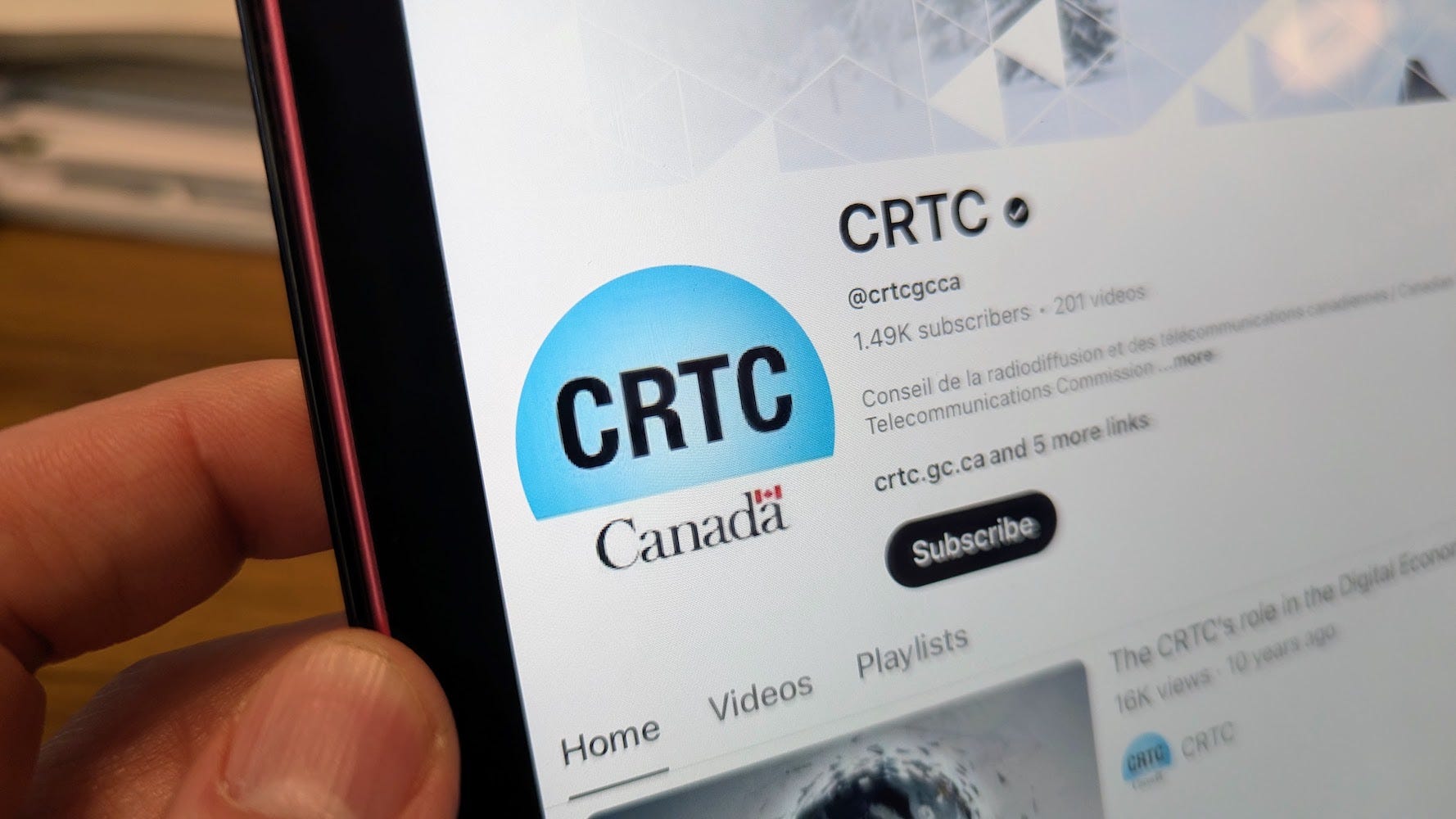
The CRTC is taking its disagreement with BELL, ROGERS and TELUS over new wireless fees to the next level by initiating a “show cause” proceeding in which the companies will be required to prove that their charges aren’t illegal.
All three recently introduced new fees to coincide with rules that came into effect on June 12 that prohibit service activation, modification and cancellation charges. Bell has added a $40 device-handling fee, Telus is charging $15 for SIM cards and eSIMs (the subscriber identity modules needed to connect a customer to a network), and Rogers has a $40 setup charge, $25 shipping fee and an unspecified SIM fee.
The CRTC previously sent letters to the individual companies informing them of its belief that the charges were in violation of recent amendments to the Act, which are are intended to bar telcos from imposing fees that make it harder for customers to switch providers.
The carriers wrote back and stuck to their guns, each taking the position that the fees were for optional services that are exempt under the law.
A show cause proceeding effectively works like a court case, except that the defendants are presumed guilty rather than innocent until they prove otherwise. As per the regulator’s notice of consultation: “Based on the correspondence received to date, the Commission is concerned that the companies may be charging fees that appear to be prohibited under… the Act and that appear to be contrary to the Wireless Code and the Internet Code.”
The penalties for the companies if they are found guilty are significant, with fines of up to $10 million each. Relevant officers and directors could also face fines of $25,000 each.
The companies and members of the public have until July 30 to submit comments to the proceeding, with an Aug. 10 deadline for responses.
Show-cause proceedings aren’t common, with the latest – regarding wholesale wireless roaming on Bell and Telus networks – initiated in October, 2024. In that case, the CRTC was responding to complaints from smaller wireless carriers including Freedom Mobile that the two bigger companies were illegally limiting mandated network access.
Bell and Telus, who share a network, claimed that smaller carriers who signed roaming agreements with them individually were only entitled to roam on their respective portions of that network. In September, 2025, the CRTC ruled against the two big carriers and forced them to honour roaming agreements across their entire footprint.
🎧 ON THE PODCAST THIS WEEK:
Food, Rent and Anxiety: Marit Stiles Says Ontarians Are At a Breaking Point

The NDP took a drubbing in the last federal election, suffering its worst defeat in history. The party lost 17 seats, with its share of the popular vote falling by two-thirds to just 6.3 per cent.
🏦 BANKING
Speaking of charges, CIBC has agreed to pay $10 million to settle a class-action lawsuit over non-sufficient fees (NSFs). The lawsuit alleged that the bank charged multiple NSFs on single transactions – so, for example, when a billing company tried to withdraw money from a customer’s account several times, the customer was hit with the fee each time. Koskie Minsky, the law firm behind the class action, alleged that CIBC had levied the multiple fees between Sept. 21, 2020 and May 31, 2024. The firm has also engaged in similar cases against BANK OF MONTREAL, TD BANK, SCOTIABANK and ROYAL BANK, with settlements already reached with the last three.
🛒 GROCERIES & RETAIL
Just a reminder that some Canadians may see some extra cash popping up in their bank accounts starting today with the federal government’s quarterly affordability benefit kicking in as of July 3. Lower-income households are to receive the CANADA GROCERIES AND ESSENTIALS BENEFIT in amounts ranging from $679 for a single individually annually to $890 for married or common law partners, with each eligible child under 19 also getting $234. The government introduced the benefit in January, boosting and renaming the previous GST/HST credit as a measure to help with the rising cost of groceries and other necessities.
Petro-Canada and Petro-Pass gas station operator BVD PETROLEUM has agreed to sell an Ontario gas station and card lock facility, which is geared to transport vehicles, as part of an asset deal with CENOVUS ENERGY. BVD will sell the location to a buyer approved by the Competition Bureau to appease the agency’s concerns over competition between the Petro-Canada outlet and an Esso station on the Queen Elizabeth Way between St. Catharines and Niagara Falls. “Competitive gasoline markets are necessary to keep prices in check,” said interim competition commissioner Jeanne Pratt in a release. “This agreement will preserve competition for Canadians travelling between St. Catharines and Niagara Falls by ensuring that BVD’s acquisition does not eliminate important local competition.”
🕺 ENTERTAINMENT
It was quite the week for SONY. First up, the company notified PlayStation users in the United Kingdom that it will soon delete 551 movies from user accounts due to licensing terms with content owner Studio Canal. Users who have previously bought the content, which includes films such as Pan’s Labyrinth, Rambo: First Blood and Terminator 2: Judgement Day, will no longer be able to stream it as of Sept. 1. As gaming sites such as Kotaku have noted, there was no mention of refunds or any other attempts to make good with customers, which again reaffirms “the fact that you are never truly buying anything that’s digital, just temporarily renting it.”
The PlayStation maker also announced this week that it will soon end physical disc production, with all new games selling as digital downloads only as of January 2028. Analysts point out that this was an inevitability, with approximately 80 per cent of game sales now coming digitally, but a good number of gamers are angry about SONY’s move nevertheless as it will eliminate the secondary used market. The news also doesn’t sit well given the above item, and because it closely follows word that the upcoming Grand Theft Auto 6 – expected to be one of the biggest game releases ever – is shipping without a disc. Even comedian and former Daily Show host Trevor Noah is mad:


The PARAMOUNT merger with WARNER BROS. DISCOVERY saga marches on, with this week’s developments including news that the British government intends to challenge the $110 billion (U.S.) deal. Culture Minister Lisa Nandy says her opposition stems from concerns over a “sufficient plurality of views in news media” and a “sufficient plurality of persons with control of the media enterprises.” Paramount says it welcomes the opportunity to engage in constructive dialogue with “interested government bodies and relevant authorities.” Canada’s Competition Bureau is reviewing the merger but has not said whether it intends to challenge it or not.
🛢️ RESOURCES
In last week’s roundup, we mentioned that the Competition Bureau was having a look at SATURN OIL & GAS’s $116 million takeover of fellow Calgary resource firm BURGESS CREEK EXPLORATION. It turns out the deal won’t be challenged, with the Bureau confirming that it issued an advance ruling certificate (ARC) – essentially, a notification that it won’t oppose the transaction – on June 25. Saturn’s operations are focused on Western Canada, particularly in Saskatchewan and Alberta, while Burgess Creek operates mainly in Saskatchewan and Manitoba.
🚨 COMING UP
If you’ve got a pet – and you probably do, given that more than half of all Canadian households have at least one – you’re going to want to tune in to this Tuesday’s episode of the Do Not Pass Go podcast. EMMA HARRIS, co-founder and chief executive of Novel – a new veterinary clinic in Burlington, Ont. – joins us to talk about how private equity roll-ups are causing pet care costs to skyrocket and how independent operations are innovating to counter.
One item I'd like the competition bureau or CRTC to look at is the different pricing of Sportsnet and TSN on cable vs. direct subscription in their apps. Cogeco has a sports cable addon that includes Sportsnet and TSN for $22 per month. This includes use of their apps. Both Sportsnet and TSN charge $29.99 per month for a direct subscription to their apps. That's $38 per month more.
By comparison, Crave charges the same price for a cable addon or direct subscription.